Category: Uncategorized

Cruiseships

Weather
The climate of Cairns is distinctly tropical, characterised by warm temperatures year-round and two main seasons: the dry season and the wet season. This consistent warmth, combined with its coastal location, makes Cairns an attractive destination for visitors seeking sunshine, reef experiences, and lush rainforest landscapes.
The dry season typically runs from May to October and is widely considered the best time to visit. During these months, Cairns enjoys lower humidity, clear blue skies, and pleasant daytime temperatures averaging between 24°C and 29°C. Rainfall is minimal, and conditions are ideal for outdoor activities such as snorkelling on the Great Barrier Reef or exploring nearby rainforests. Evenings can be slightly cooler, particularly in the middle of winter (June to August), but temperatures rarely drop below 17°C.
In contrast, the wet season spans from November to April and brings higher humidity, increased rainfall, and the possibility of tropical storms or cyclones. Temperatures during this time are typically warmer, ranging from 26°C to 33°C, but the humidity can make it feel significantly hotter. Rainfall often occurs in short, heavy bursts, usually in the afternoon or evening, rather than as continuous downpours. This season transforms the surrounding landscapes, with waterfalls flowing strongly and the rainforest appearing at its most vibrant.
While the wet season can bring dramatic weather, it also has its advantages. The region is quieter with fewer tourists, and the scenery is particularly lush and photogenic. However, visitors should be mindful of marine stinger season (generally November to May), when protective measures are recommended for swimming in the ocean.
Cairns’ weather is also influenced by its coastal geography and proximity to the Coral Sea. Sea breezes help moderate temperatures, while the nearby mountains and rainforest can create localized weather patterns, including sudden showers.
Overall, Cairns offers a reliably warm climate throughout the year, with each season providing a different experience. Whether enjoying the dry season’s clear skies or the dramatic tropical atmosphere of the wet season, the weather plays a central role in shaping the region’s natural beauty and appeal.


History
The tropical city of Cairns has a rich and layered history shaped by Indigenous culture, colonial expansion, and its evolution into a global tourism hub. Today, Cairns is widely recognised as the gateway to the Great Barrier Reef and the Daintree Rainforest, but its origins tell a story of resilience, adaptation, and economic transformation.
Long before European settlement, the Cairns region was home to the Indigenous Yidinji people. They lived sustainably across the coastal plains, rivers, and rainforest areas for thousands of years, maintaining a deep spiritual and cultural connection to the land. Their knowledge of seasonal food sources, waterways, and the environment enabled them to thrive in what can be a challenging tropical climate. Today, their heritage remains an important part of Cairns’ identity.
European interest in the region began in the late 19th century. In 1876, the discovery of gold on the Hodgkinson River sparked a rush of prospectors into the area. To support this influx, a port was needed on the coast, and Cairns was officially established that same year. It was named after William Wellington Cairns, who served as Governor of Queensland from 1875 to 1877.
In its early years, Cairns struggled with difficult environmental conditions. The land was swampy, prone to flooding, and surrounded by dense rainforest. However, determined settlers worked to clear the land and establish infrastructure. The construction of the Kuranda Scenic Railway in the 1880s was a major milestone. This engineering feat connected Cairns to the inland mining areas and helped secure its role as a key regional port.
By the early 20th century, Cairns began to diversify economically. While gold mining declined, agriculture—particularly sugar cane—became the backbone of the local economy. The fertile coastal plains proved ideal for farming, and the sugar industry attracted a diverse workforce, including South Sea Islanders, Europeans, and later migrants from around the world. This multicultural influence helped shape the character of modern Cairns.
Cairns also played a strategic role during World War II. Its proximity to the Pacific made it an important base for Allied forces. Military infrastructure expanded rapidly, and the city became a staging point for operations in the Coral Sea and beyond. This period brought significant development, including improvements to roads, airfields, and port facilities, many of which laid the groundwork for future growth.
In the decades following the war, Cairns transitioned from an industrial and agricultural centre into a tourism-driven economy. The 1980s marked a turning point, with increased investment in infrastructure and promotion of the region’s natural attractions. The development of facilities such as the Cairns Esplanade and the expansion of reef tourism made the city more accessible and appealing to international visitors.
Today, Cairns is a vibrant and modern city that balances its historical roots with a strong focus on tourism and environmental sustainability. It serves as a launch point for reef and rainforest experiences, while also celebrating its Indigenous heritage and multicultural community.
From its origins as a frontier settlement supporting a gold rush to its current status as one of Australia’s premier tourist destinations, Cairns has undergone remarkable transformation. Its history reflects not only the challenges of developing a remote tropical region but also the opportunities created by its unique natural surroundings.
Cyclones
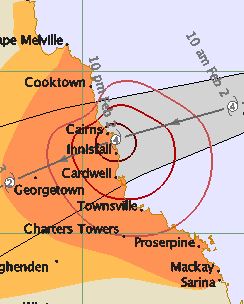
The tropical city of Cairns sits in one of Australia’s most cyclone-prone regions. Located along the Coral Sea in Far North Queensland, Cairns experiences a wet season from November to April, when warm ocean temperatures and atmospheric conditions create the ideal environment for tropical cyclones. These powerful systems have played a significant role in shaping the city’s history, infrastructure, and community resilience.
Early Cyclones and Settlement Challenges
In the late 19th and early 20th centuries, as Cairns was developing into a port town following the gold rush inland, cyclones posed a serious threat to early settlers. With limited forecasting technology and fragile infrastructure, storms frequently caused widespread damage to buildings, crops, and transport links. Flooding and storm surges were particularly destructive, often inundating the low-lying coastal plains on which Cairns was built.
These early experiences forced the community to adapt quickly. Buildings were gradually designed to withstand strong winds, and drainage systems were improved to cope with heavy rainfall. Even so, cyclones remained an unpredictable and often devastating force.
Notable Cyclones in the Region
Several major cyclones have left lasting marks on Cairns and the surrounding region. One of the most significant was Cyclone Winifred, which caused extensive damage to homes, agriculture, and infrastructure across North Queensland. The storm highlighted vulnerabilities in building standards and led to stronger construction regulations.
In 2006, Cyclone Larry struck further south near Innisfail but still had a major impact on the Cairns region. It devastated banana crops and caused widespread economic losses, demonstrating how cyclones can affect not just infrastructure but also key industries.
Perhaps the most well-known recent event was Cyclone Yasi. Although Yasi made landfall south of Cairns, the city experienced strong winds, heavy rain, and widespread disruption. The scale and intensity of Yasi reinforced the importance of disaster preparedness and coordinated emergency response.
Effects on Infrastructure and Economy
Cyclones affect Cairns in multiple ways. High winds can damage homes, businesses, and public facilities, while heavy rainfall often leads to flash flooding and river overflows. Storm surges pose a particular risk to coastal areas, including parts of the Cairns Esplanade, where seawater can inundate low-lying land.
Economically, cyclones can disrupt tourism—one of Cairns’ primary industries—by halting flights, closing reef operations, and deterring visitors during and after storm events. Agriculture, especially sugar cane and bananas, is also highly vulnerable to cyclone damage, with entire crops sometimes wiped out in a single event.
Building Resilience and Preparedness
Over time, Cairns has become far more resilient to cyclones. Advances in meteorology now allow for accurate tracking and early warnings, giving residents time to prepare. Strict building codes require structures to withstand high wind speeds, and modern homes are designed with cyclone safety in mind.
Emergency services and local authorities have well-developed disaster management plans, including evacuation procedures and community shelters. Public awareness campaigns encourage residents to prepare cyclone kits, secure their properties, and stay informed during the event.
A Defining Force in Cairns’ Identity
Cyclones remain an inevitable part of life in Cairns, but they are no longer the unpredictable disasters they once were. Instead, they are a natural force that the community has learned to respect and prepare for. The city’s ability to adapt—through improved infrastructure, planning, and community awareness—has transformed cyclones from a crippling threat into a manageable risk.
Understanding the history and impact of cyclones in Cairns offers valuable insight into the region’s resilience and the ongoing relationship between people and the powerful natural environment of tropical North Queensland.
Marine Stingers in Cairns
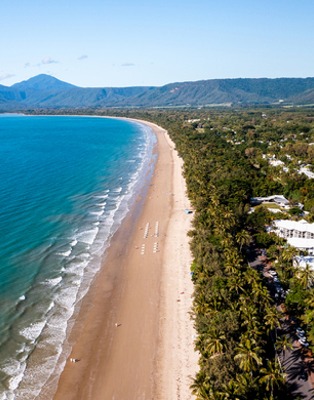
Predominantly a problem along the coast and not usually affecting the Great Barrier Reef, North Queensland’s marine and estuarine environment is home to many interesting animals, including some harmful jellyfish collectively known as marine stingers. These small marine stingers are easy to avoid but can cause discomfort if you are stung, and some of the tropical species, such as the Irukandji and Chironex fleckeri (the Box Jellyfish) can be lethal. So, to ensure you enjoy your day at the beach or Great Barrier Reef, always remember to swim at a patrolled beach and look out for the safety signs. if visiting the Great Barrier Reef always use the lycra “stinger suits” offered. As well as protecting you from stingers they offer great sun protection. Very rarely there is a small fee charged as these suits are very lightweight and need to be replaced often.
Prevention
- Always swim at patrolled beaches, between the red and yellow flags.
- Look for and obey safety signs.
- Don’t enter the water when beaches are closed.
- Ask a lifesaver or lifeguard for help and advice if you need it.
- Don’t touch marine stingers washed up on the beach, they can still sting you.
- In tropical waters it is also recommended that you take these additional measures.
- Swim in the stinger nets where provided.
- It is recommended that a full-body lycra suit, or equivalent, be worn to provide a good measure of protection against marine stings, particularly during the stinger season, which generally runs from November to March.
- Enter the water slowly – this gives marine stingers time to move away.
Prevention
- Always swim at patrolled beaches, between the red and yellow flags.
- Look for and obey safety signs.
- Don’t enter the water when beaches are closed.
- Ask a lifesaver or lifeguard for help and advice if you need it.
- Don’t touch marine stingers washed up on the beach, they can still sting you.
- In tropical waters it is also recommended that you take these additional measures.
- Swim in the stinger nets where provided.
- It is recommended that a full-body lycra suit, or equivalent, be worn to provide a good measure of protection against marine stings, particularly during the stinger season, which generally runs from November to March.
- Enter the water slowly – this gives marine stingers time to move away.
From Wikipaedia – “Marine stingers are classified under the Phylum Cnidaria, being a group of animals that occur in polyp and/or medusa phases, are radially symmetrical, usually with tentacles and contain stinging cells produced by the animal itself. Examples of Cnidarians include a range of animals from corals and sea anemones to hydroids and marine stingers. The three classes of marine stingers that can inflict a painful sting include the Class Hydroza, Class Scyphozoa and Class Cubozoa. The term ‘box’ jellyfish can often confuse people as it is a general term used to describe Cubozoan jellyfish, including Irukandji, the Jimble and Chironex fleckeri (commonly known as ‘box jellyfish’). Whilst these are the individuals pose the greatest threat, within the other two classes are the blue bottle and hair jelly which can cause much discomfort. The intensity and severity of the sting from a marine stinger varies with geographical location and a the health and fitness of the victim.”
Markets in Cairns
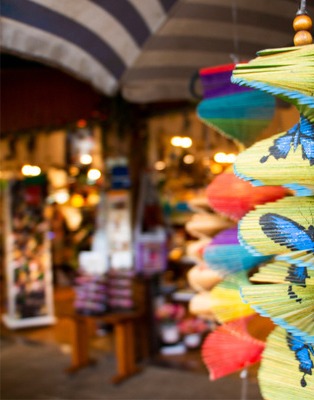
Tropical North Queensland is famous for its relaxed, outdoor lifestyle, and nowhere is that more evident than in the vibrant markets of Cairns, Port Douglas, and Kuranda. From beachfront stalls to rainforest hideaways, these markets offer a mix of local produce, handmade crafts, Indigenous art, and street food, making them a must-do experience for visitors and locals alike.
Cairns Markets
Cairns has the widest variety of markets in the region, with options running throughout the week and into the evening.
Rusty’s Markets are the city’s most iconic. Located in the CBD, they operate Friday 5:00am–6:00pm, Saturday 6:00am–3:00pm, and Sunday 6:00am–2:00pm. These bustling markets are best known for fresh tropical fruit, vegetables, and international street food.
For a more relaxed, seaside setting, the Cairns Esplanade Markets run every Saturday from 8:00am–4:00pm along the waterfront. Here you’ll find locally made jewellery, art, and souvenirs with the Coral Sea as a backdrop.
If you prefer shopping after dark, the Cairns Night Markets are open daily from around 4:30pm–11:00pm, offering everything from gifts to massage services in an air-conditioned indoor setting.
A more seasonal option is the Tanks Arts Centre Markets, held on the last Sunday of the month from 9:00am–2:00pm (April to November only). These markets are set among rainforest surrounds and focus on arts, crafts, and boutique food stalls.
Port Douglas Markets
About an hour north of Cairns, Port Douglas hosts one of the most scenic markets in Australia. The Port Douglas Sunday Markets are held every Sunday from 8:00am–1:30pm at Anzac Park overlooking the Coral Sea.
These markets are unique in that all products must be locally made or produced, meaning visitors can browse authentic handmade goods, tropical clothing, art, jewellery, and gourmet treats. The beachfront setting, combined with live music and food stalls, makes it as much a social event as a shopping experience.
There are occasionally additional or seasonal markets in the marina area, but these may not run year-round, so the Sunday markets remain the most reliable option.
Kuranda Markets
Nestled in the rainforest village of Kuranda, these markets are among the most distinctive in Australia, combining shopping with a lush natural setting.
The Original Rainforest Markets are open daily from around 10:00am–3:00pm, offering a bohemian mix of handmade crafts, alternative products, and global cuisine.
Nearby, the Heritage Markets operate Wednesday to Sunday from 10:00am–3:30pm and provide a more structured, all-weather shopping experience with a wide range of artisan goods and сувенirs.
Kuranda’s markets are largely open year-round, though individual stallholders may vary depending on the season and visitor numbers. The wet season (roughly November to April) can occasionally affect attendance, but the markets themselves generally remain open.