Cyclones
The tropical city of Cairns sits in one of Australia’s most cyclone-prone regions. Located along the Coral Sea in Far North Queensland, Cairns experiences a wet season from November to April, when warm ocean temperatures and atmospheric conditions create the ideal environment for tropical cyclones. These powerful systems have played a significant role in shaping the city’s history, infrastructure, and community resilience.
Early Cyclones and Settlement Challenges
In the late 19th and early 20th centuries, as Cairns was developing into a port town following the gold rush inland, cyclones posed a serious threat to early settlers. With limited forecasting technology and fragile infrastructure, storms frequently caused widespread damage to buildings, crops, and transport links. Flooding and storm surges were particularly destructive, often inundating the low-lying coastal plains on which Cairns was built.
These early experiences forced the community to adapt quickly. Buildings were gradually designed to withstand strong winds, and drainage systems were improved to cope with heavy rainfall. Even so, cyclones remained an unpredictable and often devastating force.
Notable Cyclones in the Region
Several major cyclones have left lasting marks on Cairns and the surrounding region. One of the most significant was Cyclone Winifred, which caused extensive damage to homes, agriculture, and infrastructure across North Queensland. The storm highlighted vulnerabilities in building standards and led to stronger construction regulations.
In 2006, Cyclone Larry struck further south near Innisfail but still had a major impact on the Cairns region. It devastated banana crops and caused widespread economic losses, demonstrating how cyclones can affect not just infrastructure but also key industries.
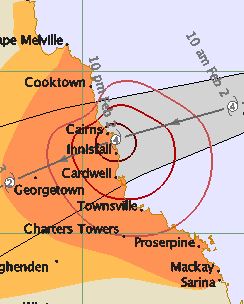
Perhaps the most well-known recent event was Cyclone Yasi. Although Yasi made landfall south of Cairns, the city experienced strong winds, heavy rain, and widespread disruption. The scale and intensity of Yasi reinforced the importance of disaster preparedness and coordinated emergency response.
Effects on Infrastructure and Economy
Cyclones affect Cairns in multiple ways. High winds can damage homes, businesses, and public facilities, while heavy rainfall often leads to flash flooding and river overflows. Storm surges pose a particular risk to coastal areas, including parts of the Cairns Esplanade, where seawater can inundate low-lying land.
Economically, cyclones can disrupt tourism—one of Cairns’ primary industries—by halting flights, closing reef operations, and deterring visitors during and after storm events. Agriculture, especially sugar cane and bananas, is also highly vulnerable to cyclone damage, with entire crops sometimes wiped out in a single event.
Building Resilience and Preparedness
Over time, Cairns has become far more resilient to cyclones. Advances in meteorology now allow for accurate tracking and early warnings, giving residents time to prepare. Strict building codes require structures to withstand high wind speeds, and modern homes are designed with cyclone safety in mind.
Emergency services and local authorities have well-developed disaster management plans, including evacuation procedures and community shelters. Public awareness campaigns encourage residents to prepare cyclone kits, secure their properties, and stay informed during the event.
A Defining Force in Cairns’ Identity
Cyclones remain an inevitable part of life in Cairns, but they are no longer the unpredictable disasters they once were. Instead, they are a natural force that the community has learned to respect and prepare for. The city’s ability to adapt—through improved infrastructure, planning, and community awareness—has transformed cyclones from a crippling threat into a manageable risk.
Understanding the history and impact of cyclones in Cairns offers valuable insight into the region’s resilience and the ongoing relationship between people and the powerful natural environment of tropical North Queensland.